
Are Your Benefits Invisible?

The job of the professionals who work in employee benefits, compensation, and total rewards is to craft the strongest possible total compensation packages for their organization’s employees. Their focus is on providing offerings that will attract and retain the best talent.
The challenge, though, which is well documented through many different surveys and studies, is that even the strongest employee benefits plans will be underutilized if employees don’t know about them.
Benefits Hiding in Plain Sight
Consider the following from a report put out by Bank of America. The column labeled “Employers” is the percentage of surveyed employers that offer a particular benefit while the “Employees” column is employees who responded that they are aware that their employer offers the benefit:
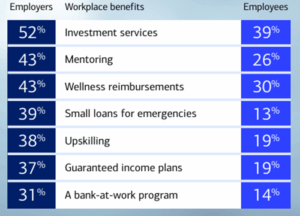
In each case, dedicated individuals are working hard to provide employees with benefits that are genuinely useful. But, unfortunately, their efforts fall short because employees are largely unaware that these programs exist.
Another example described in the report relates to Health Savings Accounts (HSAs). An HSA, when paired with a high-deductible health plan (HDHP), allows employees to save for both current and future health care expenses. The problem is that many employees who do have access to an HSA don’t fully understand how the accounts work. For example, many employees don’t realize that, in contrast to Flexible Savings Accounts (FSAs), HSA contributions roll over year to year, giving account holders a vehicle to build savings for future health care expenses.
Marketing Matters
It’s tough for employees to appreciate their benefits if they don’t have a solid understanding of what is being provided to them. And even if they do know what is being provided, if they lack knowledge on how to use those benefits that can also lead to unnecessary frustration. This is why benefits communications are essential to ensuring that an organization’s total rewards offering is having the intended impact.
The bottom line is that a benefit employees don’t know about or don’t understand is a benefit that isn’t helping employees and isn’t delivering a return to the employer.
Investing in Communications
The good news is that investing in benefits education and communications can close the gap between what is offered and what employees are aware of. Having an annual communications plan that provides information throughout the year and through different media (electronic, print, virtual, in-person, etc.) is essential. HR needs to do everything possible to ensure that employees know what is available to them, how it helps them meet their personal goals, and how to maximize what they get out of their employee benefits.
Getting the Message Out
There is no one-size-fits-all solution to the challenge and there’s certainly not one magic bullet that will work instantly for all of an organization’s employees. Employers should be focusing on several key strategies and solutions to make sure that their investment in total rewards is having maximum impact:
- Making open enrollment materials clear, personalized, and easy to access and understand
- Show up year-round in different places, formats, and channels
- Embrace a marketing mindset (and perhaps even consider collaborating with your marketing colleagues to optimize your efforts)
- If you aren’t already doing so, consider sending total rewards statements to your workforce
Seeing Results
Studies consistently find that employees who understand their benefits are more satisfied with those benefits and also report higher engagement scores. Employer investments in upgrading their communications can create outsized returns. In one recent survey, employees who report being highly satisfied with their benefits package are 2.5 times more likely to report overall job satisfaction than those employees who are not satisfied with their employee benefits. Communicating clearly and often will serve to pull back the curtain on the total rewards you are already providing to your employees, greatly enhancing their impact and making your employees’ lives that much easier.
Employee Benefits, Employee Engagement, Total Rewards Communications
